

Academics
Introduction
The 3 R's - Core Knowledge - Treasures - Waterford
Urban Education Exchange - Saxon Math - Educational Technology Plan
Our Mission
BCCS is more than a school; it is a mission. Our mission is to ensure that our students have the same opportunities for future success as students attending the best public schools in the capital region. We fulfill this mission by being focused on the needs of our students, by building a real community in which we share core values and support each other, and by using every minute of the day to help our students succeed academically, personally, and socially. BCCS expects more from its students, more from its parents/families, more from its teachers, and more from its administrators. For only by expecting more can we achieve more. Our high expectations require us to push our boys and girls to reach higher, work harder, and learn more than they have been asked to do before.
If we truly care about our students, we need to use our energies to ensure that they have the skills they need to succeed. If we only show caring but do not give them the tools to go to college we have not given them enough of a gift. We must ensure that they have the talents that will open doors of opportunity and give them the freedom to choose a future that will be fulfilling. They need a strong knowledge base, the ability to read, write, and calculate along with problem-solving. They must be able to analyze, synthesize, apply and evaluate-to form quality habits of mind. Therefore, at BCCS, academics come first, for they will provide those tools.
Great teaching is the answer. Teaching that is engaging, rigorous, and exciting will make the difference; teaching that is focused on attaining important standards; teaching that is focused on what students actually learn, not just on what we teach; teaching that gets kids working, involved, and having fun. We should not minimize the importance of making it enjoyable, nor should we ever minimize the importance of real results. Real learning yields real results on tests. Remember that teachers are the soul of the school; it is the teachers who make the real difference in the lives of children and teachers who make results happen.
The New 3 R's will help us achieve and sustain our goals.
RI...Relationship:
Relationships form the foundation for our success as educators at BCCS. Knowing who our students are; why they think and behave they do (whether positively or negatively) and what they desire to accomplish places us in and advantaged position to affect change.
RII...Reading & Writing across disciplines:
Reading and Writing across all disciplines is essential for high student achievement. Our students can only meet and exceed the New York State Standards by perfecting their literacy and numeracy competence. Subsequently, the next R will be attained.
RIII...Results:
We expect high academic results on all standardized and formal/informal assessments. Our students must exceed all NYS Standards in ELA, Math, and Science.
Core Knowledge
At Brighter Choice, we are also proud to follow the core knowledge sequence for Visual Arts and Performing Arts. We make great efforts for the children in Albany to have sufficient exposure to the elements of music, art, composers, artists, historical arts periods, and the like. In order for children to have a well rounded education, they need a fundamental knowledge base that the arts can provide.
Treasures
Brighter Choice Charter Schools has also introduced Treasures, a McGraw-Hill reading curriculum built upon a foundation of research supporting the requirements of No Child Left Behind (NCLB). The program focuses on phonemic awareness, phonics, fluency, vocabulary, and text comprehension. The program also provides a variety of validated assessment tools that help teachers to identify strengths and weaknesses, plan instruction and meet the needs of all students. Explicit, systematic instruction and research proven routines meet all requirements of NCLB insuring Adequate Yearly Progress for students.
Waterford
Brighter Choice Charter School also uses a nationally recognized, research-based computer program that highly successful charter elementary schools are implementing to increase student achievement. Waterford is a comprehensive program for grades K-2 that helps students develop fluency in phonological awareness, letter recognition, keyboarding, and reading comprehension.
Urban Education Exchange
Urban Education Exchange supports teachers with a research-based, reading comprehension curriculum that emphasizes the three important building blocks of strong readers: inferential thinking skills, a broad knowledge base, and relevant, in-context vocabulary words. The core of UEE’s reading curriculum is the Concepts of Comprehension©, a framework of 19 inferential thinking skills identified by UEE and confirmed by research as the most important skills for helping a child deeply understand what they are reading. Lessons include specific learning objectives for explicit instruction and contain the accumulated best practices developed and captured in over 17 years of experience in urban classrooms.
Saxon Math
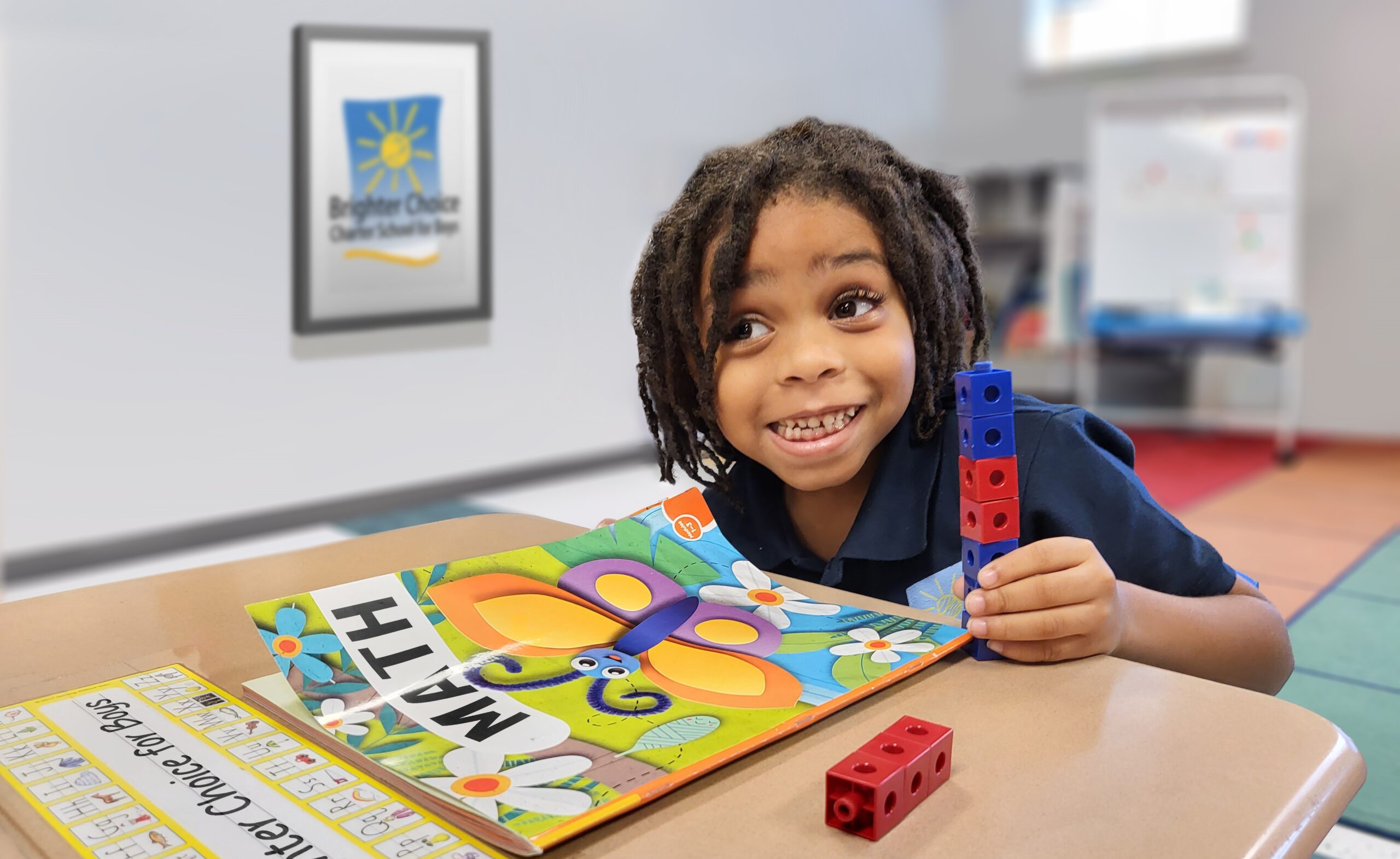
In the early grades, BCCS uses the Saxon Math program. Saxon has extensive research behind it demonstrating efficacy with low income student populations. Saxon has two unique aspects: explicit instruction and a distributed approach to instruction, practice and assessment. Years of research have shown that explicit instruction is more effective than non-explicit instruction in teaching basic math skills. Moreover, research has shown that explicit instruction is the most effective way to teach critical thinking skills.
Saxon's distributed approach is based on breaking complex concepts into related increments, recognizing that smaller pieces of information are easier to teach and easier to learn. Then they systematically distributed the instruction, practice and assessment of those increments across a grade level. The instruction of related increments is carefully distributed throughout the grade level, ensuring that students have the opportunity to master each increment before being introduced to the next related one. Foundational research has shown that instruction that presents material to be learned over several intervals (distributed instruction) results in greater student achievement than instruction that is not distributed. Well-established research has shown that this spaced (distributed) approach has produced significantly higher levels of student learning than massed presentations such as those found in programs with a chapter-based approach.
The Kindergarten Saxon program includes the following components:
- The Math Meeting (20 minutes)
- The Lesson (15-20 minutes)
- Lesson Practice / Handwriting Practice (10 minutes)
The First Grade program includes:
- The Math Meeting (20 minutes)
- Fact Practice (10-15 minutes)
- The Lesson (15-30 minutes)
- Guided Class Practice (15-20 minutes)
Teachers lead a new lesson every day. Because of the design of the program, there are abundant opportunities for teachers to re-teach concepts and facts that were not mastered as needed. There are 135 lessons in the Saxon Kindergarten program. By completing a lesson each day, BCCS Kindergarten students should be on to First Grade math by the end of April. By mastering a complete Saxon lesson every school day, our students remain on pace to complete at least a year of high school algebra by the end of eighth grade.
In BCCS classrooms, the Math Meeting is conducted as a full class on the rug. The Lesson is conducted in two homogeneous, ability-based groups. One group is led by the Lead Teacher in one part of the room, while the other is led by the Teacher in another part of the room. In both cases, students have a neat, structured environment in which to learn. Teachers use chairs, desks, physical spacing, explicit expectations, clear modeling, and lots of training to ensure that students are on-task and focused on learning.
Back to Top
Educational Technology Plan: BCCS for Boys | BCCS for Girls