

Single-Sex Classes
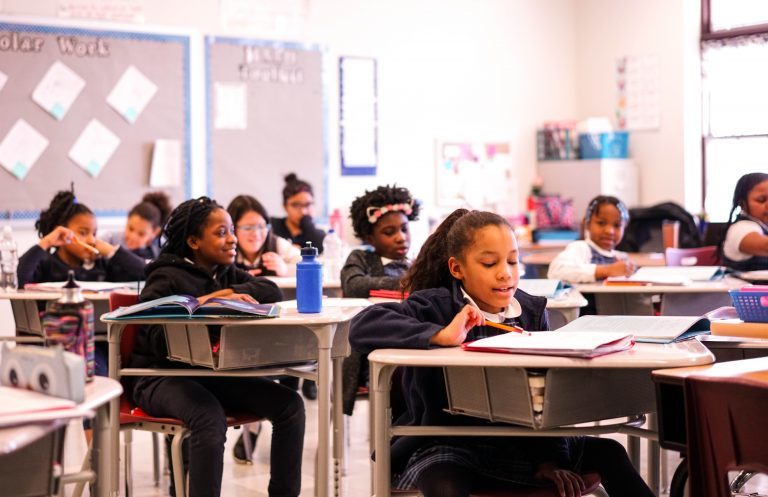
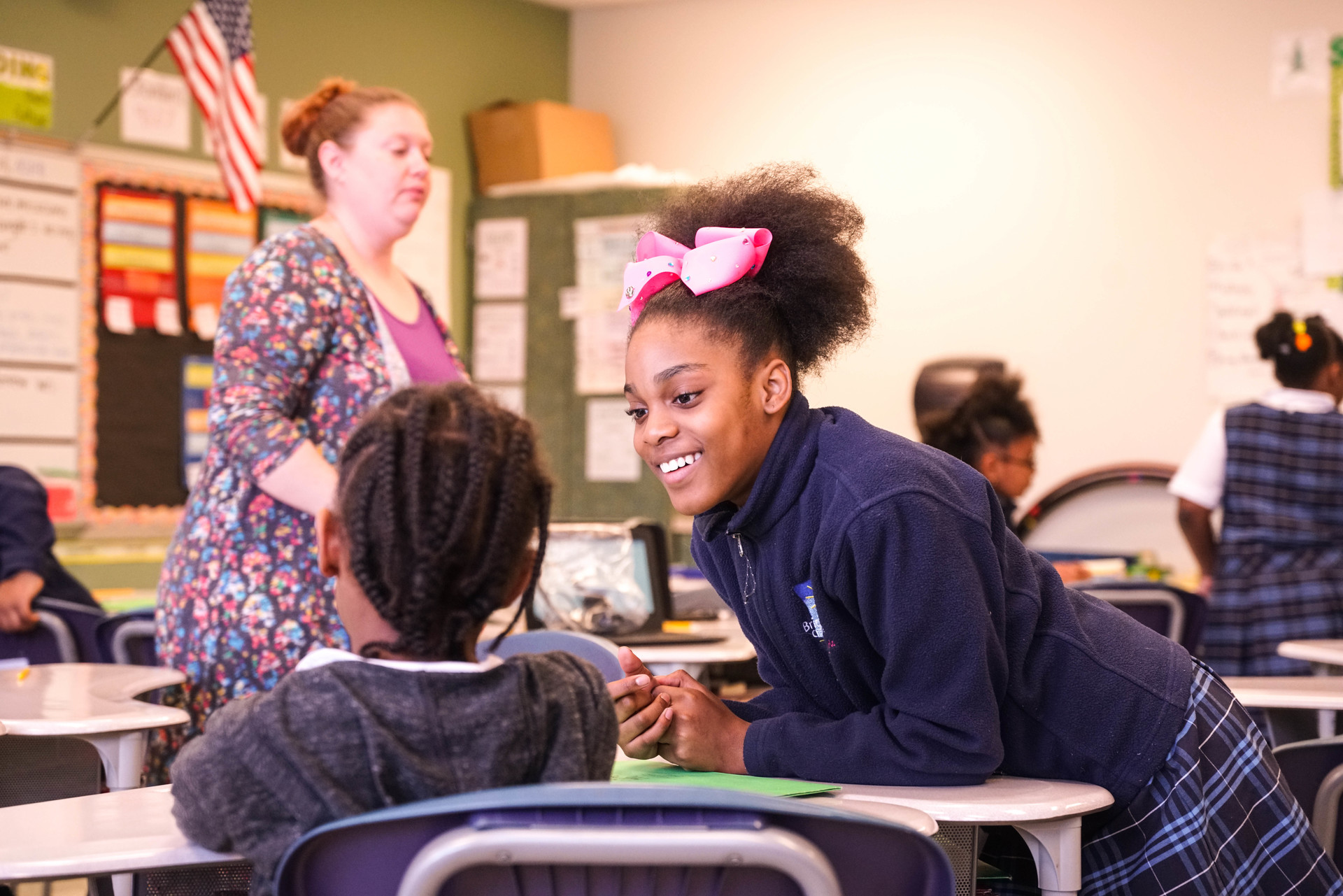
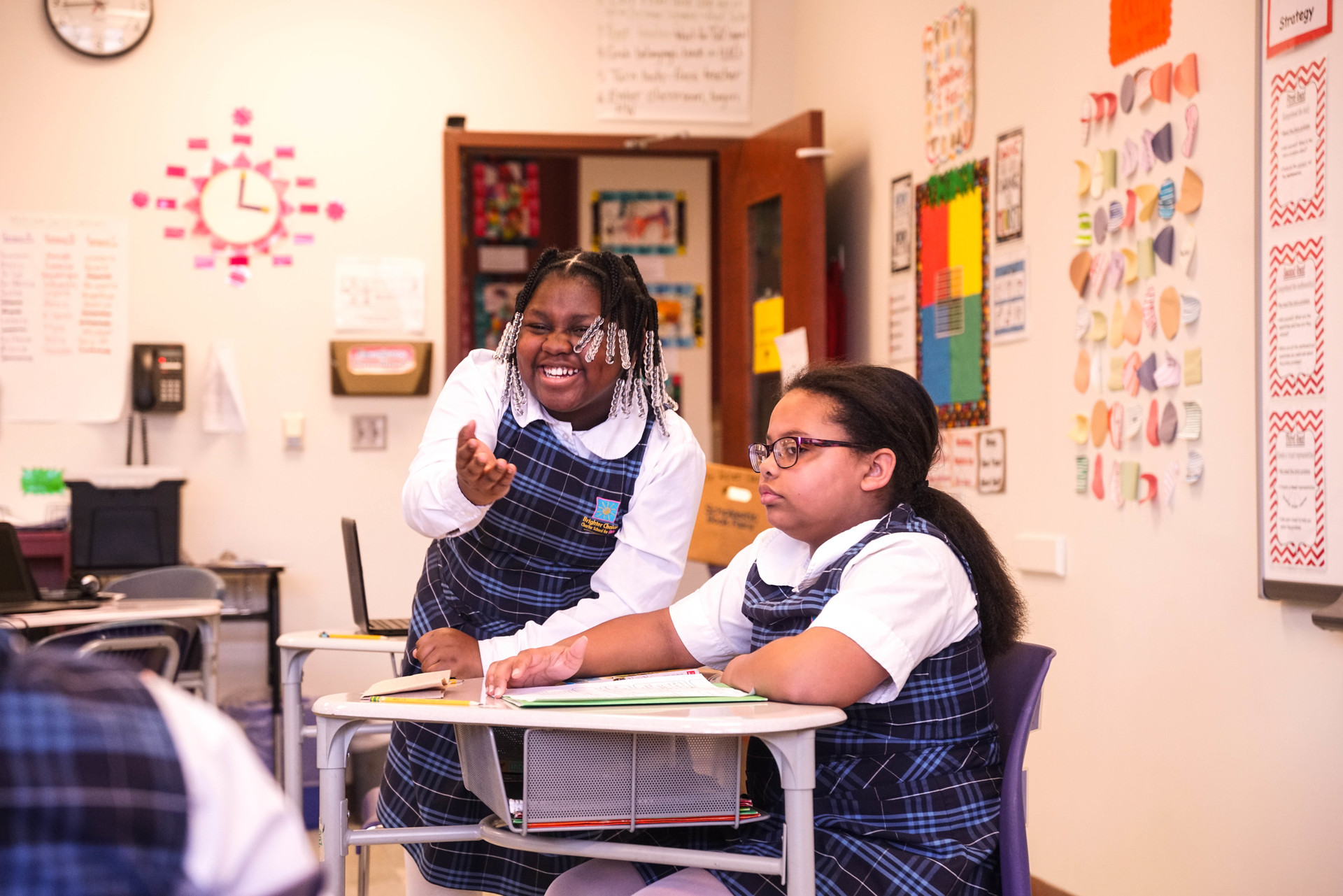
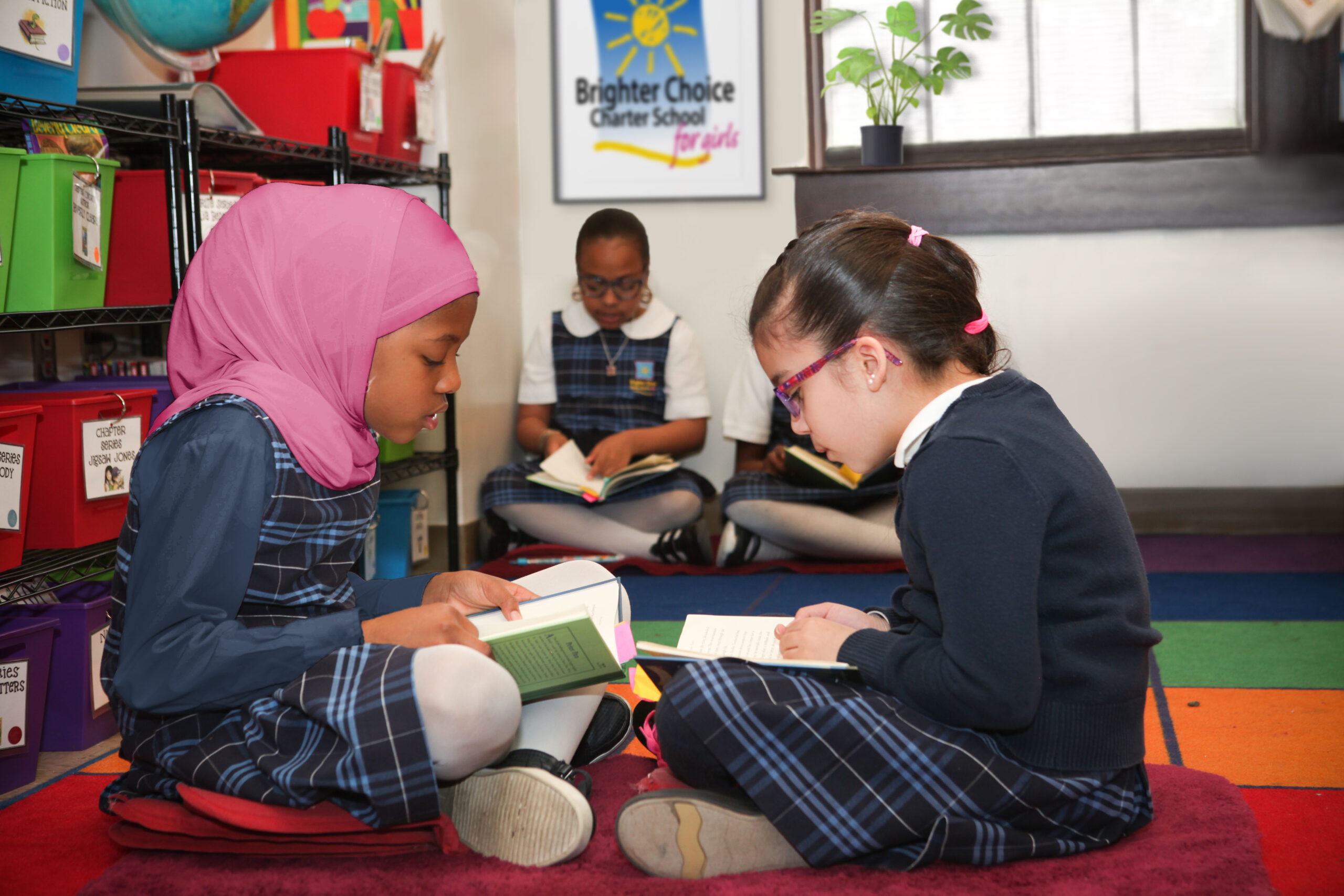
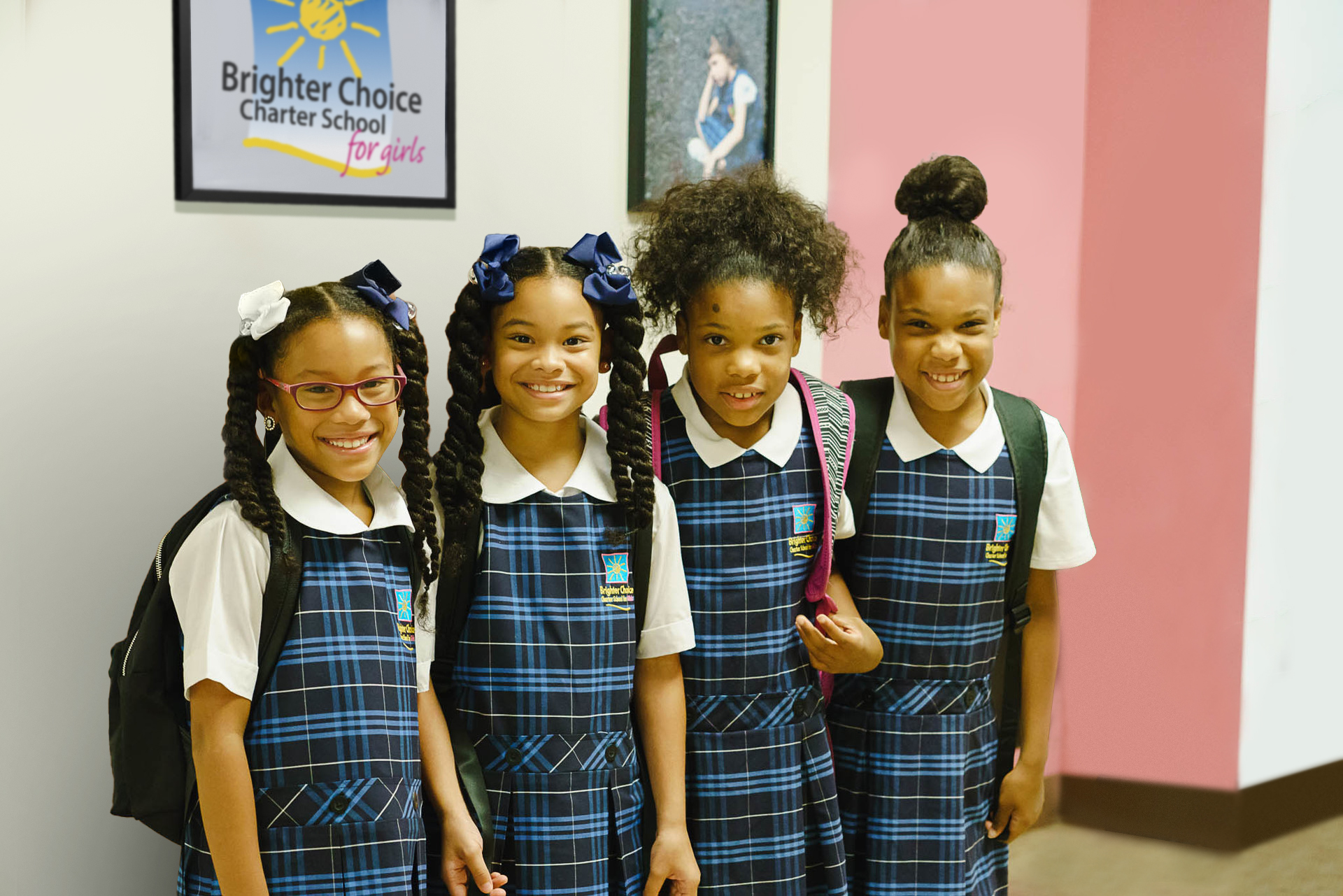
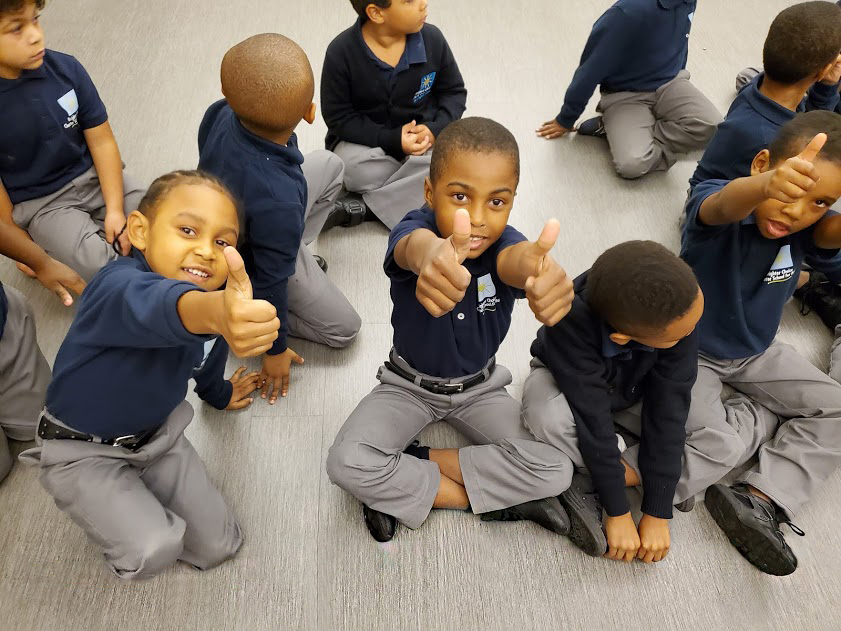
The Brighter Choice Charter School for Boys and the Brighter Choice Charter School for Girls co-exist in one facility and share administration, staff, and school design. Under this unique and innovative approach, boys and girls at BCCS are educated by the same teachers to the same high standards, and benefit from the same course offerings and same access to resources. This approach offers the benefits of single-sex instruction, while ensuring equal opportunity for boys and girls alike.
Overall, the Brighter Choice Charter School's single-sex classes:
- increases the diversity of public school options available in the City of Albany, which is especially important because education is not a "one size fits all" business
- diminishes the inequity of the status quo under which access to single-sex education for boys or girls in Albany is limited largely to those students whose parents can afford to send them to the top private academies in Albany, including the Christian Brothers Academy, LaSalle Institute in Troy, St. Gregory's School, Academy of the Holy Names, Albany Academy for Boys, Albany Academy for Girls, and Emma Willard. Among the prominent graduates of Albany's single-sex academies are: Assemblymen John McEneny and Ronald Canestrari, who both attended CBA, and Albany County Executive Michael Breslin, who graduated from the former Vincentian Institute, a single-sex school
- benefits Albany's at-risk students the most, because academic research indicates that at-risk students receive the most gains from single-sex education (discussed in greater detail below). At-risk students are given preference in the school's admission lottery
- assumes that boys and girls are equally capable of meeting high standards, thus the school does not rely either on overbroad generalizations about different talents, capacities, or preferences of boys and girls or on fixed notions concerning the roles and abilities of boys and girls
- makes available a corresponding single-sex public education for both boys and girls, rather than providing such education to just one gender or the other
- carries out the legislative intent of the New York State charter-school law, which specifically authorizes single-sex charter schools (§2854 [2] [a]; pg. 10, line 9)
The Academic Research
Girls Research - Boys Research - African-Americans & Hispanics
Why Single Sex Works Better - Counter Arguments - Summary - Resources
In the Supreme Court's decision in U.S. v. Virginia (1996), commonly referred to as the VMI decision, the Court ruled 7-1 that the Virginia Military Institute's policy of admitting only men violated the U.S. Constitution. A central fact in the case was that no corresponding single-sex public education was afforded women - a circumstance remedied in the design of the Brighter Choice Charter School. And, the Court went out of its way to explain that its decision related only to the "unique" circumstances of the VMI case. Nonetheless, in the VMI decision, all justices - from Ruth Bader Ginsburg to Antonin Scalia - agreed that single-sex education offers positive educational benefits.
Chief Justice William Rehnquist, in his concurrence, explained that "considerable evidence shows that a single-sex education is pedagogically beneficial for some students...and hence a State may have a valid interest in promoting that methodology." In writing the majority opinion, Justice Ginsburg similarly noted the position that "single-sex education affords pedagogical benefits to at least some students" and concluded: "that reality is uncontested in this litigation."
Based on a review of the academic research, what evidence is there that single-sex education benefits students? And, more specifically, what kinds of students benefit the most?
Girls
For decades, the presumption was that co-ed schools provided a more equitable environment for learning. But in recent years a number of researchers have built an increasingly persuasive case that co-ed schools in many cases are not educating girls as well as boys.
A leading role in highlighting the problems faced by girls has been played by the American Association of University Women (AAUW), in a series of studies published throughout the 1990s. A national poll commissioned by AAUW, Shortchanging Girls, Shortchanging America (1991), highlighted that girls aged 9-15 suffered from lower self esteem, less willingness to stand up for their views with teachers, and lower interest in science and mathematics.
The report How Schools Shortchange Girls (1992), also published by the American Association of University Women, sparked an intense national debate with its findings that girls were disadvantaged in classrooms by being called upon less frequently and encouraged less than male students.
American University professors Myra Sadker and David Sadker added to the debate with the publication of Failing at Fairness: How America's Schools Cheat Girls (New York: Charles Scribner's Sons, MacMillan Publishing Company, 1994). The report, based on a three-year study involving structured visits to more than 100 classrooms in several states, asserted that girls were called upon less than boys, that boys received more attention when answering questions, and that boys received more encouragement to work through problems.
In 1995, the AAUW, in its report Growing Smart: What's Working for Girls in School, took the next step and endorsed single-sex schooling as a response, while urging for changes in existing co-ed schools. Specifically, the report noted: "Single-sex programs deserve consideration as a vehicle to address specific needs or remedy existing inequities," (Sunny Hansen, Joyce Walker, Barbara Flom, University of Minnesota's College of Education and Human Development, Growing Smart: What's Working for Girls in School [Washington, D.C.: American Association of University Women Educational Foundation, 1995], 60).
By that point, substantial research confirmed the benefits of single-sex education for girls. At the higher education level, the research yielded "agreement that women's colleges produced a disproportionate share of women leaders, especially the smaller colleges (less than 500 students) and, most especially, the Seven Sister colleges (Barnard, Bryn Mawr, Mount Holyoke, Radcliffe, Smith, Vassar, and Wellesley)," (Valerie E. Lee and Helen M. Marks, "Sustained Effects of the Single-Sex Secondary School Experience on Attitudes, Behaviors, and Values in College," Journal of Educational Psychology, Vol. 82, No. 3, 1990, 579). (Perhaps the most famous graduate presently of an all-girls school is Sen. Hillary Clinton, a Wellesley graduate.)
Similarly positive results were found in secondary schools, too. Based on their research of secondary schools, Valerie E. Lee of the University of Michigan's School of Education and Anthony S. Bryk of the University of Chicago's Department of Education found: "Whether considering academic achievement..., gains in achievement..., future educational plans, affective measures of locus of control or self-image, sex role stereotyping, or attitudes and behaviors related to academics, we found that single-sex schools appear to deliver specific advantages to their students. The results are particularly strong for girls' schools..."("Effects of Single-Sex Secondary Schools on Student Achievement and Attitudes," Journal of Educational Psychology, Vol. 78, No. 5, 1986, 394).
Lee and Bryk added: "Girls' schools evidenced consistent and positive effects on student attitudes towards academics. These students were more likely to associate with academically oriented peers and to express specific interests in both mathematics and English." (Journal of Educational Psychology, Vol. 78, No. 5, 1986, 387).
In a follow up study, Valerie E. Lee and Helen M. Marks found that these positive academic results were sustained upon entry into college, regardless of whether the students went to coed or single-sex colleges. Lee and Marks explain: "[A] single-sex secondary education appeared to engender higher aspirations in female college students..." Also, "young women who attended single-sex secondary schools held significantly less stereotypic attitudes about the role of women in the workplace compared with their counterparts who attended coeducational schools," (Valerie E. Lee and Helen M. Marks, "Sustained Effects of the Single-Sex Secondary School Experience on Attitudes, Behaviors, and Values in College," Journal of Educational Psychology (Vol. 82, No. 3, 1990), 584).
Lee and Marks note: "Association with academically oriented friends...has proven to be more common among girls' school students than among girls in coeducational environments." Also, when compared with coed schools, girls' schools show "greater academic emphasis, a more competitive atmosphere, more interest in academics, and more time spent on homework," (Journal of Educational Psychology (Vol. 82, No. 3, 1990, 579)
Columbia University researchers found that girls, but rarely boys, are hampered by a "fear of success" and that this fear is "more common [among those that attend coed elementary schools] and it appears to be increased by attendance at a coed high school."
While noting the challenges of educational research, Pamela Haag, a research associate with the AAUW Educational Foundation, concludes: "There is something of a consensus that girls in single-sex schools tend to perceive subjects such as math and physics as less 'masculine' and may have stronger preferences for them than their coeducated peers."
The U.S. General Accounting Office notes: "Recent research on the academic achievement of young girls suggests that they defer to boys in coeducational classrooms, are called on less than boys, and are less likely than boys to study advanced mathematics and science." The GAO went on to conclude: "Some educators believe that single-gender settings can improve girls' academic performance and attitude toward these subjects."
Rosemary Salomone observes: "[C]oeducation has not always translated into equal opportunities for women." Despite the overwhelming dominance of coed schools, especially in public elementary and secondary education, "[t]here were no achievement areas in which coeducational-school students surpassed their single-sex counterparts..."
Overall, based on these and other research findings, the U.S. Department of Education has concluded that "there is empirical support for the view that single-sex schools may accrue positive outcomes, particularly for young women."
After a long period of declining interest in single-sex education, this research has prompted a renewal of interest in single-sex education, especially for all-girls schools. New all-girls schools in Harlem and Chicago (discussed further below) offer two prominent examples.
With much of the focus over the past decade on the impact of coeducation on girls, some researchers have suggested that boys may be disadvantaged as well, albeit in different respects.
One researcher notes: "[B]oys rather than girls are now on the short end of the gender gap in many secondary school outcomes. Currently, boys are less likely than girls to be in an academic (college preparatory) curriculum. They have lower educational and occupational expectations, have lower reading and writing test scores, and expect to complete their schooling at an earlier age."
Contrary to the expectations of some, boys who received single-sex instruction did not display more stereotypical views of women than boys in coed environments. According to research on high school students, Lee and Bryk conclude: "These results suggest that stereotyping attitudes are not an inevitable consequence of an all-male environment."
Cornelius Riordan, an educational researcher and associate professor of sociology at Providence College, notes that educational outcomes for white males seem relatively unaffected by whether they are schooled in a coed setting or a single-sex school. Riordan speculates that this may result from the privileged position of white males. In his words: "In the case of white students in America, this norm favors males at the expense of females for the high school level and beyond." Importantly, "no studies document that coed schools are better for males than single-sex settings."
Finally, the U.S. General Accounting Office reports: "Educators and other experts with whom we spoke view single-gender programs as a way to address...high dropout rates, low academic achievement, and other problems faced by many urban males."
African-Americans and Hispanics
Riordan also has discovered that while the results of single-sex education are apparent for girls, these positive impacts are even more dramatic for African-American and Hispanic children, male and female. The performance of African-American and Hispanic students in single-sex schools is stronger on all tests, on average scoring almost a year higher than similar students in coeducational settings.
In 1997, as part of an AAUW convened roundtable, Riordan summarized the status of research on the relative benefits of single-sex schooling:
The academic and developmental consequences of attending one type of school versus another type of school are virtually zero for middle-class and otherwise advantaged students; by contrast, the consequences are significant for students who are or have been historically or traditionally disadvantaged -- minorities, low- and working-class youth, and females (so long as the females are not affluent).
Why Does Single-Sex Work Better for Some Students?
But why do some students do better in single-sex environments than in co-ed schools? A few theories have been offered.
In coed schools, "there is a good deal of gawking, speculating, and general preoccupation with those of the opposite sex who are most proximate." Single-sex schools, by eliminating this factor, enable a more single-minded focus on academics. Put another way, "students may pursue their studies, classroom discussions, and school activities without needing to be confronted on a daily basis with male-female socialization issues."
Jill Rojas, principal of Jefferson Leadership Academies, the first public middle school in the country that offers single-sex instruction for boys and girls (a "third generation" single-sex school), has seen first-hand the impact of eliminating these social distractions. "We have seen many students start to focus heavily on academics. They no longer clown or try to impress the opposite sex. Girls are more apt to answer questions aloud in class as well as ask them. Girls are learning to be more academically competitive and boys are learning to collaborate."
Riordan offers additional possible rationales to explain the positive effects of single-sex schools:
- the diminished strength of youth's cultural values
- a greater degree of order and control
- the provision of more successful role models
- a reduction of sex differences in curriculum and opportunities
- a reduction of sex bias in teacher-student interaction
- a reduction of sex stereotypes in peer interaction
- the provision of a greater number of leadership opportunities
- a pro-academic parent/student choice, which is required by single-sex schools.
Trickett, Trickett, Castro, and Schaffner, based on their research, add: "Single-sex schools were perceived as having a more academic orientation, with greater task emphasis and competition, than coeducational [schools]."
Some have argued that the answer to any gender differences is to reform coed schools, not switch students to single-sex settings. The GAO summarizes these views as follows:
Some experts who are not proponents of single-gender education as a strategy noted that research has not conclusively identified single-gender education as the desired solution to gender bias in coeducational settings. Some believe that successful strategies used in single-gender settings -- smaller classes and more individual attention -- can be just as effective in coeducational settings. They believe teacher training in diversity and equity can also contribute to a bias-free coeducational classroom. Finally, some experts caution that separating the sexes should not be viewed as a simple solution to complex problems and that program goals, content, and desired outcomes must be carefully scrutinized.
But these arguments present a false dichotomy. Within a context of alternative public school options, both single-sex education and reform of coed schools can proceed simultaneously, to the benefit of all affected boys and girls.
The academic research suggests positive educational benefits of single-sex schooling for girls (if not affluent), at-risk students, and African-American and Hispanic students (regardless of sex). Further, white males either benefit slightly or at worst realize a neutral outcome.
Given the focus of the Brighter Choice Charter School on at-risk children from economically disadvantaged families (largely African-American and Hispanic families in Albany), sound support for the school's particular approach to single-sex education is found in the academic research.
Resources on Single-Sex Public Schools in the U.S.
- Academic Research on Single-Sex Instruction
- Quotations on Single-Sex Education
- List of Public Single-Sex Schools (March 2004)
- Profiles of Public Single-Sex Schools (April 2002)
- Select News Clippings (July 2002)
- Quotations from Conference Panelists (May 2002)
- Shuttered Single-Sex Schools and Classes (May 2002)
- Notice of Proposed Rulemaking (March 2004)
- National Association for Single Sex Public Education
- National Coalition of Girls Schools
- International Boys Schools Coalition